








Basements are among the most valuable yet vulnerable parts of any home. They often serve as storage spaces, utility rooms, additional living areas, or foundations that support the entire structure of a house. However, because they are located below ground level, they are constantly exposed to moisture, groundwater pressure, humidity, and potential water intrusion. Without proper protection, even a small amount of water can lead to structural damage, mold growth, unpleasant odors, and long-term deterioration of the home. This is why Basement waterproofing has become an essential part of responsible home maintenance and property protection.
Many homeowners do not realize the importance of protecting their basement until they experience the consequences of water damage. Damp walls, musty smells, peeling paint, and visible water stains are often the first signs of a deeper issue. Once moisture begins entering the basement, it can spread quickly and affect flooring, insulation, stored belongings, and even the structural integrity of the foundation. Addressing these problems early is always more cost-effective than dealing with extensive repairs later.
Modern waterproofing solutions are designed to prevent water intrusion before it becomes a serious problem. These solutions combine interior and exterior techniques, drainage systems, sealants, and foundation protection methods to create a dry and safe environment. When properly implemented, Basement waterproofing not only protects the home but also improves indoor air quality and increases property value.
Why Basement Waterproofing Matters for Every Home
Water intrusion in basements is more common than many homeowners think. Rainfall, melting snow, rising groundwater levels, and poor drainage systems can all contribute to moisture buildup around the foundation. Over time, this moisture finds its way into small cracks or weak points in basement walls and floors.
One of the most important reasons to invest in waterproofing is to prevent structural damage. When water repeatedly enters a basement, it can weaken concrete, corrode metal reinforcements, and cause cracks to expand. These structural issues can become expensive to repair if left untreated for too long.
Another major concern is mold and mildew growth. Moist environments create the perfect conditions for mold spores to spread. This not only damages walls and furniture but can also negatively impact indoor air quality. Mold exposure may lead to respiratory issues, allergies, and other health concerns, especially for children and older adults.
Waterproofing also helps protect personal belongings stored in basements. Many homeowners use basements for storage, keeping furniture, clothing, documents, and seasonal items there. Even small leaks can damage these items beyond repair.For these reasons, Investing in basement waterproofing is not just a maintenance decision but a long-term investment in home safety, comfort, and value.
Common Causes of Basement Water Problems
Understanding the causes of basement water issues helps homeowners take preventive measures before serious damage occurs. One of the most common causes is poor drainage around the home. If gutters and downspouts are not properly directing water away from the foundation, water can accumulate near basement walls and seep inside.
Another common issue is foundation cracks. Over time, natural settling of the house or soil movement can create small cracks in basement walls or floors. These cracks may seem minor at first but can allow significant water intrusion during heavy rain.High groundwater levels can also lead to moisture problems. In areas where the water table is close to the surface, hydrostatic pressure can push water through even the smallest openings in the foundation.
In some cases, inadequate waterproofing during construction is the main issue. If the original building process did not include proper sealing or drainage systems, the basement may be more vulnerable to water penetration.These problems highlight why investing in basement waterproofing early is essential for preventing long-term damage and maintaining a strong foundation.
Types of Basement Waterproofing Solutions
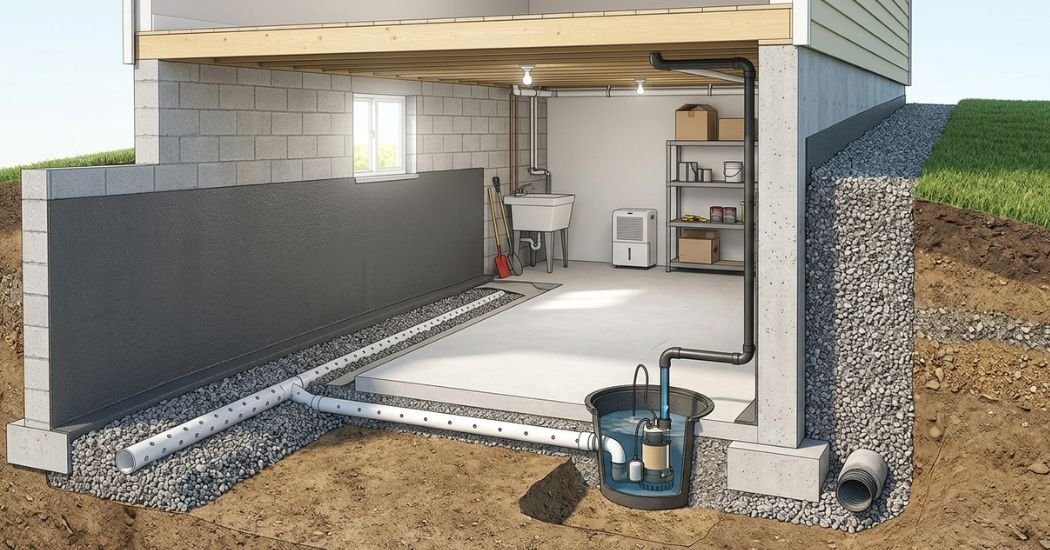
There are several methods used in modern waterproofing systems, and each one serves a specific purpose depending on the condition of the basement and the severity of water intrusion.Interior waterproofing focuses on managing water after it enters the basement. This includes drainage systems, sump pumps, and vapor barriers that help control moisture levels and redirect water safely out of the home.
Exterior waterproofing is considered one of the most effective long-term solutions. It involves applying protective coatings, installing drainage systems, and sealing the outside walls of the foundation to prevent water from entering in the first place. Although it is more labor-intensive, it provides a strong barrier against groundwater pressure.
Crack injection is another common method used to seal foundation cracks. Special sealants or epoxy materials are injected into cracks to block water pathways and restore structural integrity.Drainage improvements, such as installing or repairing French drains, also play an important role in directing water away from the foundation.Each of these methods contributes to a complete waterproofing system, and professional assessment is often needed to determine the best combination for a specific property.
Benefits of Professional Waterproofing Solutions
While some homeowners attempt DIY waterproofing, professional services provide more reliable and long-lasting results. Experts have the experience, tools, and materials needed to identify hidden moisture problems and address them effectively.
One of the key benefits of professional services is accurate diagnosis. Water intrusion is not always visible, and professionals can detect underlying issues that may not be obvious to homeowners. This ensures that the root cause of the problem is addressed rather than just the symptoms.
Professional waterproofing also provides higher-quality materials and installation methods. These systems are designed to withstand long-term exposure to moisture and environmental pressure.
Another benefit is long-term cost savings. While waterproofing may seem like a significant investment upfront, it helps prevent expensive structural repairs, mold remediation, and property damage in the future.For homeowners looking for reliable protection, Investing in basement waterproofing through professional services ensures peace of mind and long-lasting results.
Signs That Your Basement Needs Waterproofing
Recognizing early warning signs can help prevent serious water damage. One of the most common indicators is a damp or musty smell in the basement. This odor often signals moisture buildup and potential mold growth.Visible water stains on walls or floors are another clear sign of water intrusion. Even small stains should not be ignored, as they may indicate ongoing leakage.
Peeling paint, bubbling drywall, or efflorescence (white powdery residue on walls) are also signs of moisture problems. These symptoms suggest that water is seeping through the foundation.In some cases, homeowners may notice pooling water or damp spots after heavy rain. This is a strong indication that drainage or waterproofing systems are not functioning properly.When these signs appear, Investing in basement waterproofing becomes a priority to prevent further damage and maintain a safe living environment.
How Waterproofing Protects Property Value
A dry and well-maintained basement significantly increases the value of a property. Buyers are often cautious about homes with a history of water damage because it can lead to costly repairs in the future.A waterproofed basement provides additional usable space, which can be converted into storage, recreational areas, or living spaces. This increases the overall functionality and appeal of the home.
Homes with proper waterproofing systems are also more energy-efficient. Moisture control helps regulate indoor humidity levels, reducing strain on heating and cooling systems.
For homeowners planning to sell their property in the future, investing in basement waterproofing can make the home more attractive to buyers and improve resale value.
Long-Term Maintenance and Prevention
Even after waterproofing is installed, regular maintenance is important to ensure long-term effectiveness. Homeowners should periodically check for cracks, inspect drainage systems, and ensure sump pumps are functioning properly.
Keeping gutters clean and ensuring proper water drainage away from the foundation also helps prevent future issues. Small maintenance efforts can significantly extend the life of waterproofing systems.
It is also important to monitor humidity levels in the basement. Using dehumidifiers can help maintain a dry environment and reduce the risk of mold growth.Consistent care ensures that waterproofing systems continue to perform effectively for many years.
Final Thoughts on Basement Protection
Basement moisture problems can lead to serious structural, financial, and health-related issues if ignored. From foundation damage to mold growth, the risks associated with water intrusion make prevention a top priority for homeowners.
Modern waterproofing solutions provide effective protection against these risks by addressing both surface-level and structural causes of moisture. Whether through interior systems, exterior barriers, or drainage improvements, a well-designed waterproofing plan ensures long-term safety and stability.
For homeowners who want to protect their property, investing in basement waterproofing is one of the most important decisions they can make. It not only prevents costly repairs but also improves comfort, safety, and property value over time.With professional guidance and proper maintenance, a dry and secure basement is an achievable goal for any home.