










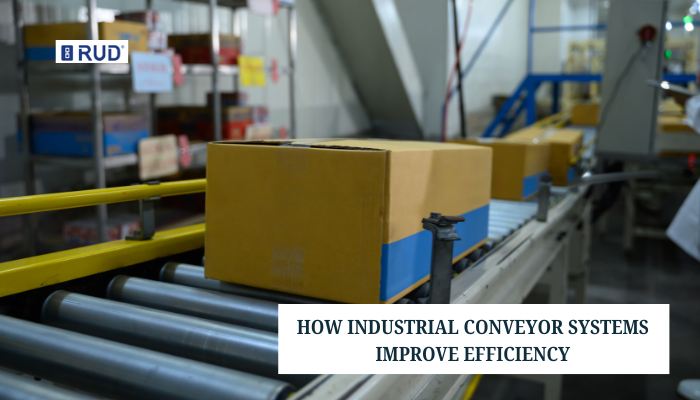
Moving bulk materials through a facility shouldn’t slow your operation down. But for a lot of Australian sites, outdated conveyor systems, poorly matched equipment, and too much manual handling still create bottlenecks every shift.
We deal with this regularly at https://www.rud.com.au. Our team supplies conveyor components and systems for Australian industrial sites. And we’ve spent years working across grain, cement, mining, and heavy manufacturing operations.
In this article, you’ll see how industrial conveyors reduce manual handling, speed up material flow between stages, and cut unplanned downtime. Each section covers a different side of operational efficiency, so you can focus on the areas that apply most to your site.
Why Conveyor Systems in Australia Are Built for High Output
Australian mining, manufacturing, and warehousing operations can move thousands of tonnes of bulk materials in a single shift.
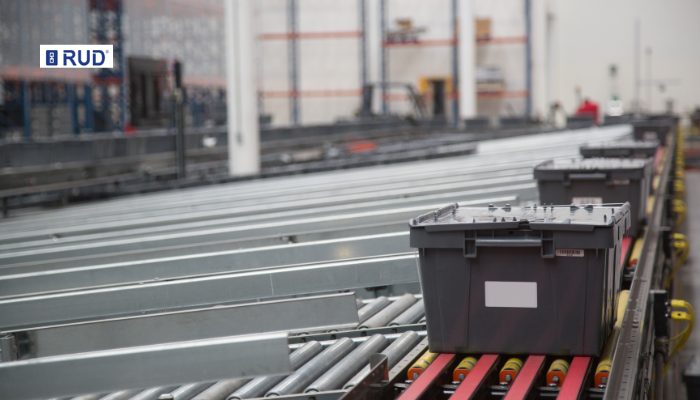
Conveyors handle that load continuously, without the stop-start delays you get from manual transport or forklift-dependent systems. And because the belt keeps running, your equipment downstream stays fed and productive.
It sounds simple, but that steady movement is what separates a strong shift from a slow one. When your conveyors match the speed and volume your site demands, output stays consistent across every stage of production.
Now, let’s look at what happens when materials are still moved by hand.
How Conveyor Systems Reduce Manual Handling Risks
Body-stressing injuries from manual handling still make up one of the largest categories of serious workplace safety claims in Australia. For operations where staff lift, carry, and push heavy loads between stages, the physical demand builds with every shift.

And honestly, most of that strain is preventable. Here’s how conveyors help reduce it.
- Reduced Physical Strain: Conveyor systems take over repetitive transport tasks so your team isn’t moving heavy items by hand across a warehouse or factory floor. Instead, your staff can focus on supervising equipment, running quality checks, and managing throughput.
- Fewer On-Site Injuries: In bulk handling operations like grain terminals or cement plants, workers often move pallets and raw materials between loading points and processing equipment. A well-placed conveyor system removes that physical demand entirely, which means fewer injury claims and less time lost to recovery (and those costs don’t stay flat year to year).
- Lower Long-Term Staffing Costs: When your operation runs with less manual labour on the floor, you spend less on injury-related downtime, temporary cover, and rehabilitation. Over a 12-month period, even a 10–15% drop in handling injuries frees up budget for better automation and equipment upgrades.
Across industries like mining, logistics, and manufacturing, the sites that reduce manual handling first tend to see the broadest efficiency gains.
How Better Material Handling Lifts Productivity
The largest productivity gains come when materials move between processing points without delays or double-handling. And for most industrial operations, that improvement starts with the right conveyor system.
Below, we’ll cover the two areas where we see the most impact.
Reducing Bottlenecks Between Processing Stages
A single slow transfer point can hold up an entire production line (even small delays compound over a full shift).
The right conveyor setup solves this. Belt-driven conveyors keep a set pace, so your downstream equipment, like roller lines, sorting stations, and packing areas, won’t sit idle waiting for the next load.
Matching the Right System to Your Site
We’ve seen this firsthand across grain, cement, and mining operations around Brisbane and Ipswich. Screw conveyors, bucket elevators, and drag chain systems all suit different material types and layouts.
Frankly, getting this wrong leads to rework, unplanned stoppages, and wasted labour. That’s why a setup built around your specific application and operational needs keeps throughput consistent and reduces pressure accumulation at transfer points.
From there, it’s worth looking at what keeps a conveyor running without interruption.
Improved Safety and Reduced Downtime on Site
Beyond throughput, the right conveyor setup also reduces safety incidents and keeps your operation running. Here’s a quick look at how specific design choices deliver those results.
| Conveyor Feature | What Your Operation Gains |
| Enclosed belt and housing design | Less dust exposure for workers and fewer material spills slowing down your line |
| Automated conveyor operation | Fewer contact injuries because workers stay clear of moving parts |
| Scheduled component maintenance | Fewer surprise breakdowns, so your production line keeps its rhythm |
Believe it or not, most stoppages come from small issues like worn belt rollers, loose pallets near loading zones, or skipped maintenance windows.
From what we’ve seen on site, the conveyors that hold up longest are the ones built to meet Australian conveyor safety standards. Pair that with a monthly inspection routine, and you lower your risk of workplace injuries and the costly disruption that follows.
Operational Excellence Starts With the Right Conveyor Setup
A well-planned conveyor system ties together output, safety, and lower maintenance costs across your full operation. And when your conveyors, belt systems, rollers, and lifting equipment all work as one connected line, operational excellence becomes a daily result rather than a target you’re chasing.
That’s the kind of setup we build toward at RUD. We supply industrial conveyors and bulk handling solutions for Australian warehousing, logistics, and manufacturing sites. If your site needs a system matched to your layout and capacity, get in contact with our team for expert guidance.