










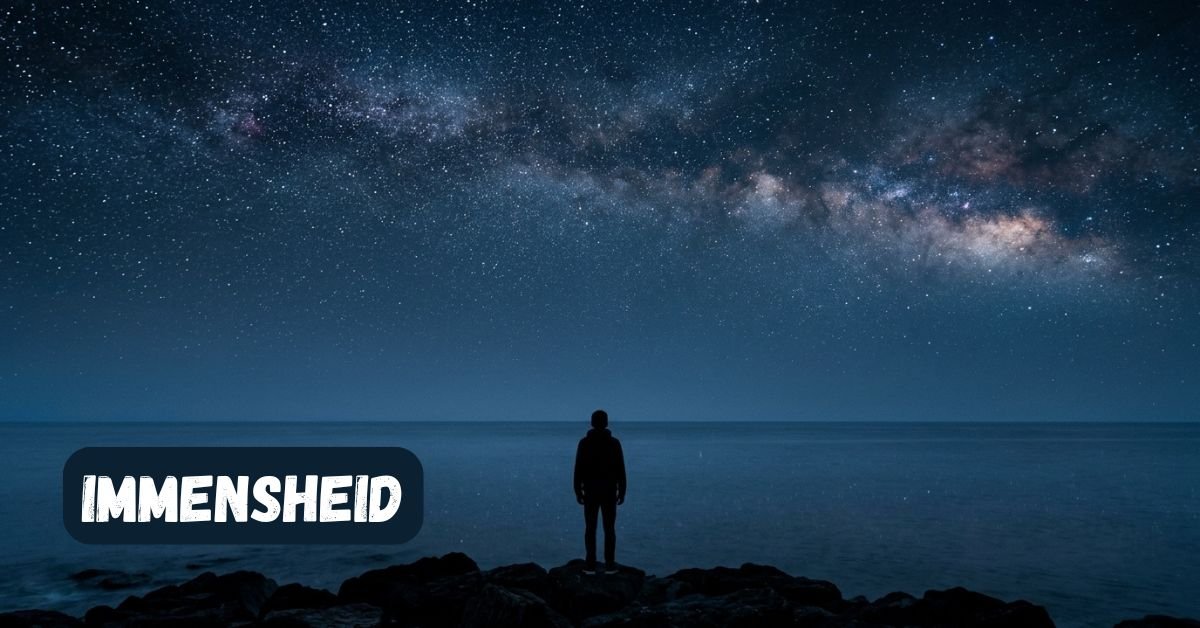
How often do you stop to think about how big the universe is? The term “immensheid” encourages us to go further into this very notion. Hugeness, immensity, and infinity are all encompassed by this Dutch word. But in light of our current circumstances, what does it signify? We can learn a great deal about our own and the cosmos’ perceptions from the history of immensheid as well as from its contemporary applications. Come explore this intriguing concept with me as we learn its cultural meaning and find ways to incorporate it into our daily lives. Brace yourself for an illuminating journey!
Defining Immensheid
The Dutch word “immensheid” means “limitless” in English. It symbolises the idea of something enormous, going beyond what is often considered possible.
Essentially, it implies a spiritual and emotional depth in addition to physical space. This deep idea makes us wonder where we fit into the cosmos.
We can’t help but feel awe and astonishment when we think about immensheid. Such moments have the potential to evoke deep contemplation of the nature of existence.
This word’s charm is in its adaptability; it may describe the grandeur of nature just as well as human experiences that feel out of this world. Immensheid encourages us to embrace the boundless space around us and inside ourselves by prompting us to delve into the boundless experiences that make up our existence.
Origins and History of Immensheid
Derived from the Dutch word for “immensity,” the origins of immensheid can be traced back to ancient languages. There is a close relationship between this idea and ideas of space and limitlessness.
Originating in philosophical debates about the boundaries of existence, historians have tracked it back to that time. Along the way, they pondered the vastness of space and humanity’s place in it.
This idea developed through the ages as a result of different cultural perspectives. Theologians in mediaeval Europe studied immensheid, a word signifying God’s infinite presence, for its divine quality.
During the Renaissance, when scientific knowledge was expanding, people started to associate immensheid with space and time. The development of astronomy sparked fresh discussions on the size of the cosmos.
The term was widely used by poets in the 19th century to describe a state of profound amazement and awe. Both the aesthetic value of nature and the existential questions raised by the very concept of vastness were represented in their works.
Modern comprehension is shaped by this illustrious past.
The Role of Immensheid in Different Cultures and Religions
The core of immensheid is woven through different religions and cultures, and it has no boundaries. It represents the limitless Brahman, the one true reality that unites all living things, in Hinduism.
Immensheid represents the boundless nature of awareness and the interdependence of all things in Buddhist philosophy. With this outlook, we are encouraged to be fully present in each instant of our infinite life and to practise mindfulness.
Immensheid is a common existentialism-related notion in Western philosophy. Philosophers such as Kierkegaard explore the human condition in relation to an endless background.
Many indigenous cultures hold a profound respect for the limitless strength of nature. Creationism and reverence for the boundless resources of our planet are recurring themes in their narratives.
Regardless of one’s religious or philosophical leanings, the concept of immensheid should always keep in mind the importance of being humble and accepting of the mystery that is life as we all fit into its enormous tapestry.
Modern Interpretations and Relevance of Immensheid
The idea of immensheid is quite meaningful in this modern, fast-paced society. It represents the breadth of human experience and the search for significance beyond the everyday.
A lot of contemporary philosophers use immensheid as a symbol for development. They contend that great realisations can be attained by fully embracing the intricacies of life. This viewpoint suggests that people should consider their own experiences and journeys from the inside out.
Another factor that has contributed to this understanding is the influence of social media. Discussions regarding the meaning of feeling huge or little in a linked universe often arise from the infinite scroll’s ability to create sentiments of both insignificance and togetherness.
Creative expressions delve even further into this subject. Modern artists express feelings related to expansiveness through a variety of media, such as abstract paintings or interactive installations that transport spectators to other worlds.
In the face of adversity, finding solace and strength in the concept of immensheid could be a great help.
How to Incorporate Immensheid into Daily Life
Your outlook might be changed by embracing immensheid in your everyday existence. Be mindful first. Whether it’s the immensity of nature or the expanse of human connections, take a few moments out of your day to appreciate it.
Ponder the concept of expansiveness through meditation. Envision yourself in an environment where every possible experience is available to you. Being open and receptive is fostered by this activity.
Make use of artwork that conveys a sense of depth and vastness in your environment. Pick out works that make you wonder and make you think deeply about life.
Get to know people by sharing stories that show how interdependent everything is. Thinking deeply about spirituality or philosophy in a group setting can lead to enlightenment.
Read works that deal with immensheid; doing so can help you make sense of the world and its intricacies and inspire you to think critically about issues beyond your normal routine.
Examples of Immensheid in Art, Literature, and Philosophy
Monumental artworks and expansive landscapes frequently depict immensheid. Consider the vast skies in the works of Caspar David Friedrich, which provide an impression of boundless space. The artist’s tender touch compels onlookers to consider their relative insignificance in the face of such natural splendour.
Some writers, like Herman Melville, explore issues of immense size in their writings, like “Moby-Dick.” In the face of anarchy, the boundless ocean represents the unknowns of life and the search for purpose.
The relationship between our existence and an incomprehensible cosmos is a central question for philosophers like Martin Heidegger. His ideas prompt serious contemplation of existence and the passage of time.
Rainer Maria Rilke’s poetry echoes astonishment at the limitless secrets of life, a sentiment shared by poets who accept this idea. This artistic creation serves as a reminder of the vastness that envelops us in all its forms, encouraging us to go deeper than what meets the eye.
Conclusion
Immensheid is more than a word; it is an idea. It conveys an immensity that reverberates across many ideologies and civilisations. To fully grasp its relevance in the modern world, one must be familiar with its historical roots.
Embracing immensheid can help us forge stronger bonds with those around us as we go about our everyday lives. We cultivate awareness and presence by integrating this fundamental idea into our daily lives.
The concept of immensheid, whether shown in literature or art, never ceases to question and stimulate contemplation. Because it compels us to delve into the intricacies of life, its significance is indisputable.
Embracing the concept of immensheid allows us to access new realms of knowledge and experiences, which enhances our lives in countless ways. This adventure should make everyone think about the meaning of connecting with the infinite space all around them, both inside and outside of themselves.
You May Like : Aagmqal: Complete Guide, Insights & Future Trends