







Water is essential for everyday life, but when it enters a property unexpectedly, it can quickly become one of the most destructive forces affecting a home or commercial building. Whether caused by burst pipes, roof leaks, appliance failures, plumbing issues, severe weather, or flooding, water intrusion can lead to extensive structural and cosmetic damage if not addressed promptly. While the initial damage may seem manageable, the long-term consequences of untreated water exposure can be far more serious and expensive.
This is why professional Water Damage Restoration plays such a critical role in protecting properties. Restoration involves more than simply removing visible water. It is a comprehensive process designed to eliminate moisture, prevent further deterioration, restore damaged materials, and return a property to a safe and functional condition. Understanding how water damage restoration works can help property owners appreciate its value in preventing long-term structural, financial, and health-related issues.
Understanding the Impact of Water Damage
Water can affect nearly every part of a building. Once moisture enters a property, it can spread rapidly through walls, flooring, ceilings, insulation, and structural components. Materials such as drywall, wood, carpet, and furniture readily absorb water, making it possible for damage to extend far beyond the original source.
The longer water remains inside a property, the greater the risk of serious deterioration. Structural materials may weaken, finishes can become stained or warped, and hidden moisture may create conditions that support mold growth. In many cases, the most significant damage occurs out of sight, making immediate action essential.
Professional Water Damage Restoration helps stop this progression by addressing both visible and hidden moisture before it causes extensive long-term problems.
Why Immediate Action Is Essential
One of the most important factors in minimizing water damage is the speed of the response. Water begins affecting building materials almost immediately after exposure. Within a short period, moisture can penetrate porous surfaces and spread into adjacent areas.
Delays in restoration allow water to continue damaging structural components and increase the likelihood of secondary issues such as mold growth and material deterioration. What begins as a relatively minor incident can quickly become a major restoration project if moisture is not removed promptly.
Timely restoration reduces the overall extent of damage, lowers repair costs, and improves the chances of preserving existing building materials. Fast action is often the key to successful recovery.
Preventing Structural Damage
One of the primary goals of water damage restoration is protecting the structural integrity of the property. Water can weaken essential building components, including framing, support beams, subflooring, and roof structures.
Wood absorbs moisture readily and may begin to swell, warp, or rot when exposed to prolonged damp conditions. Metal components can corrode, while concrete and masonry materials may experience deterioration over time if moisture remains trapped within them.
Professional restoration focuses on identifying affected structural areas and removing moisture before permanent damage occurs. By preserving the strength and stability of the building, restoration helps prevent costly structural repairs and maintains the property’s overall safety.
Eliminating Hidden Moisture
Visible standing water is only part of the problem following a water damage event. Moisture often migrates into concealed spaces behind walls, beneath flooring, inside ceilings, and within insulation materials. These hidden areas can remain damp long after surface water has been removed.
Undetected moisture creates ideal conditions for ongoing deterioration and mold development. Because these areas are not easily accessible, specialized equipment is often necessary to locate and eliminate trapped moisture effectively.
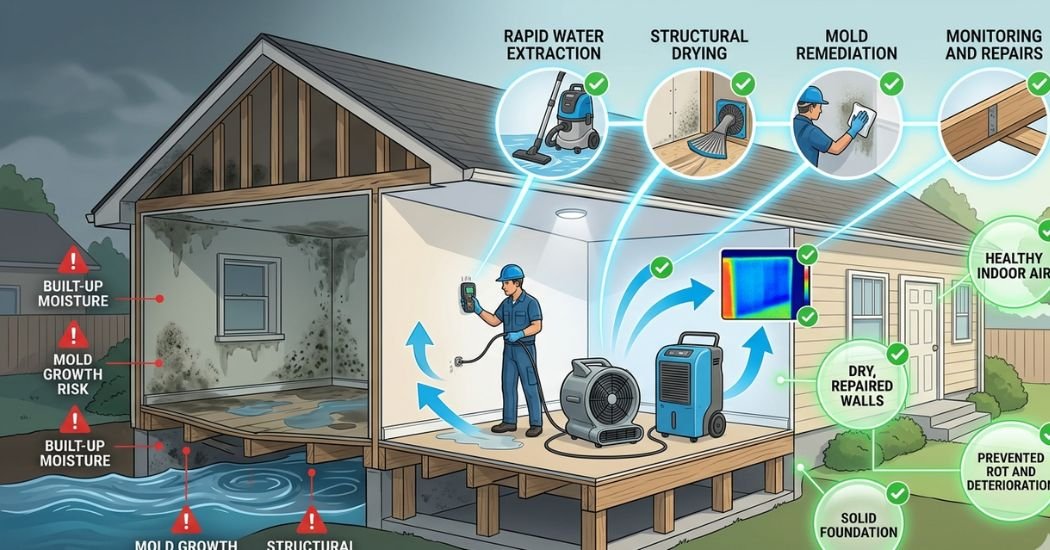
Professional restoration teams use moisture detection tools, thermal imaging equipment, and advanced drying systems to identify hidden water and ensure that affected areas are thoroughly dried. This comprehensive approach helps prevent future complications and supports complete recovery.
Reducing the Risk of Mold Growth
One of the most serious long-term consequences of water damage is mold growth. Mold thrives in damp environments and can begin developing within a relatively short period after water exposure. Once established, mold may spread throughout the property, affecting walls, ceilings, flooring, and personal belongings.
In addition to damaging materials, mold can impact indoor air quality and create health concerns for occupants. Eliminating moisture quickly is the most effective way to prevent mold from developing.
Professional Water Damage Restoration includes drying, dehumidification, and moisture control measures that reduce the likelihood of mold growth. By addressing water intrusion promptly, restoration professionals help create a healthier indoor environment while protecting the property from further damage.
Protecting Flooring and Interior Finishes
Flooring materials are particularly vulnerable to water damage. Hardwood floors may warp or buckle, carpeting can retain moisture and odors, and laminate flooring often experiences irreversible damage when exposed to standing water.
Walls and ceilings are also susceptible to staining, swelling, peeling paint, and material deterioration. Decorative finishes and interior design elements may suffer significant damage if moisture remains present for an extended period.
Restoration professionals assess affected surfaces carefully and implement drying techniques designed to preserve materials whenever possible. Early intervention can often save flooring, drywall, and finishes that might otherwise require complete replacement.
Preserving Personal Belongings
Water damage affects more than the structure itself. Furniture, electronics, documents, photographs, clothing, and other personal belongings may also be exposed to moisture. Some items can be restored successfully if treated quickly, while delays may result in permanent loss.
Professional restoration services often include content recovery efforts aimed at cleaning, drying, and restoring affected belongings. Specialized techniques can help salvage valuable items and reduce overall losses.
By addressing both structural damage and personal property concerns, restoration professionals provide a more comprehensive recovery process that helps property owners protect important possessions.
Improving Indoor Air Quality
Excess moisture can negatively affect indoor air quality even after visible water has been removed. Damp materials may release odors, support microbial growth, and contribute to an unhealthy indoor environment.
Water damage restoration includes thorough drying and dehumidification processes that help restore proper indoor conditions. Removing excess moisture reduces the risk of airborne contaminants and creates a more comfortable living or working environment.
Improved air quality benefits both residential and commercial properties by supporting occupant health, comfort, and overall well-being.
Preventing Long-Term Financial Losses
Water damage can become significantly more expensive when restoration is delayed. Small problems often escalate into larger repair projects involving structural reconstruction, mold remediation, flooring replacement, and extensive interior repairs.
Prompt restoration helps contain damage before it spreads, reducing the overall cost of recovery. By preserving building materials and minimizing secondary damage, professional restoration services often save property owners substantial amounts of money in the long run.
Investing in immediate restoration is typically far more cost-effective than addressing the consequences of prolonged water exposure.
Supporting Property Value
The condition of a property directly influences its market value. Water damage that is not properly addressed can create ongoing issues that affect both appearance and functionality. Visible stains, odors, structural concerns, and mold problems may reduce buyer confidence and lower property value.
Professional restoration helps ensure that water damage is resolved thoroughly and that the property is returned to a safe, attractive, and functional condition. Proper documentation of restoration work can also provide reassurance to future buyers.
Maintaining property value is one of the many long-term benefits of investing in professional restoration services following a water damage event.
The Professional Water Damage Restoration Process
Effective restoration involves a structured process designed to address every aspect of water intrusion. The process typically begins with a detailed assessment to determine the extent of the damage and identify affected materials.
Water extraction is performed to remove standing water quickly. Specialized drying equipment and dehumidifiers are then used to eliminate remaining moisture from building materials and indoor air. Damaged materials may be cleaned, repaired, or replaced as necessary.
Throughout the process, restoration professionals monitor moisture levels carefully to ensure complete drying. Final repairs and restoration work return the property to its pre-damage condition whenever possible.
This systematic approach helps ensure comprehensive recovery while reducing the risk of future complications.
Preventing Future Water Damage
While restoration focuses on recovering from existing damage, it also provides an opportunity to identify factors that contributed to the problem. Leaking pipes, roofing issues, poor drainage, appliance malfunctions, and inadequate waterproofing measures can all increase the risk of future water intrusion.
Addressing these underlying issues helps prevent similar incidents from occurring again. Property owners who take proactive steps following restoration often experience greater long-term protection and reduced maintenance concerns.
Combining restoration with preventive improvements creates a stronger defense against future water-related problems.
Conclusion
Water damage can have serious consequences for homes and commercial properties, affecting structural integrity, indoor air quality, personal belongings, and overall property value. While the immediate effects may be visible, the hidden and long-term impacts can be even more damaging if not addressed promptly.
Professional Water Damage Restoration protects properties by removing moisture, preventing structural deterioration, reducing mold risks, preserving valuable materials, and restoring safe indoor conditions. Through rapid response, advanced drying techniques, and comprehensive recovery strategies, restoration professionals help minimize damage and support long-term property protection.
By acting quickly and investing in professional restoration services, property owners can reduce financial losses, maintain property value, and ensure that their buildings remain safe, functional, and protected for years to come.