










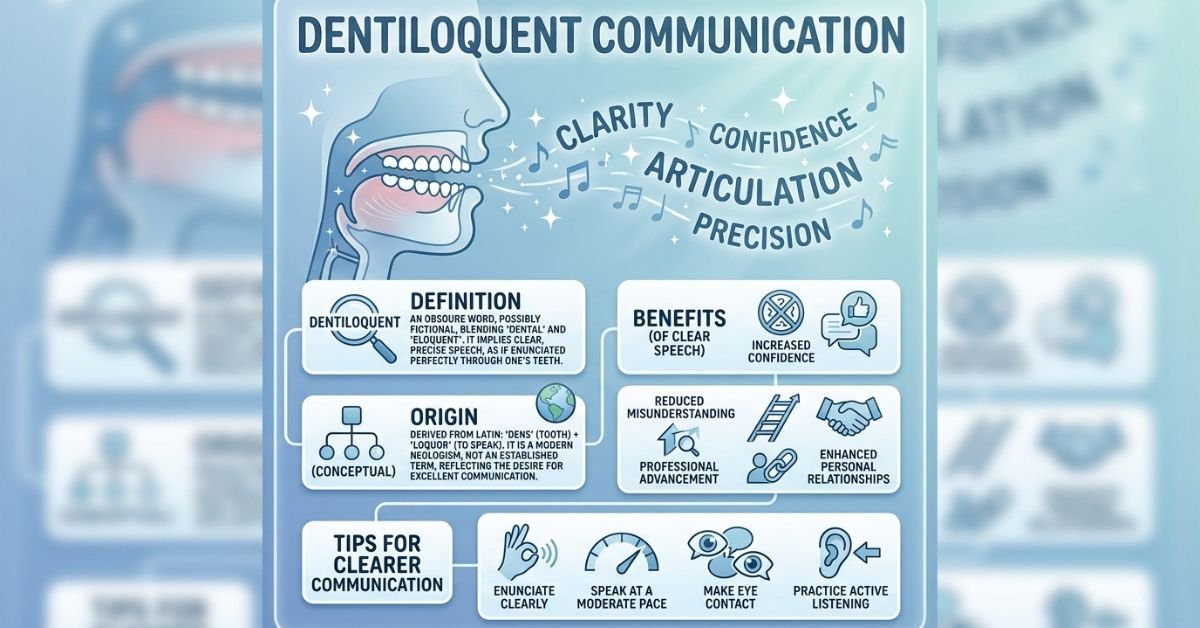
Introduction to Dentiloquent
Do you remember a time when someone’s speech held your attention? Everything matters when it comes to rhythm, word choice, and self-assurance. Let me introduce you to the word “dentiloquent,” which is not one you hear every day but is incredibly significant and endearing. People who are articulate and articulate in their communication, particularly when it concerns dental or oral health issues, are characterised by this distinctive term. Contrary to popular belief, being dentiloquent is about much more than simply knowing your dental terminology. It’s a powerful communication ability that can enhance your talks in any setting. If you want to know how to speak clearly and with style, whether it’s for an upcoming dinner party or just for everyday life, learn dentiloquence! Together, let’s explore this intriguing topic further.
The Origin and Definition of Dentiloquent
The roots of the word “dentiloquent” are “denti,” meaning teeth, and “loquor,” meaning to talk, in Latin. This intriguing word defines a person whose speech is crystal clear and exact, especially when discussing dental or oral health issues.
The idea originally arose as a means to stress the significance of clear communication in dental offices. Dentists required strong communication abilities to help their patients understand even the most intricate dental procedures.
Being dentiloquent now means more than just being able to talk about teeth. Anyone who can articulately talk about health and wellness is part of this category. When communicating with healthcare providers, it is critical to speak clearly to guarantee understanding and build confidence.
How to Use Dentiloquent in Everyday Conversations
Fun and effective, dentiloquent can be used in regular interactions. To begin, make sure to include dental-related terminology in your conversations. “I have a toothache and must visit my dentist” would be a better alternative to “I need to see the doctor.” Your speech can become more vivid with this simple adjustment.
Something along the lines of “That new toothpaste really brightened my smile!” could come up in conversation with pals. Enriching the conversation might be as simple as sharing some fascinating facts about teeth or your thoughts on dental hygiene.
Using industry-specific terminology is one way to demonstrate mastery in a business context. Discussing current trends in dental treatment, for instance, demonstrates expertise and enthusiasm for the subject.
Feel free to bring up any dental-related topics in informal conversation. It makes the subject more approachable and interesting, which in turn invites others to talk more deeply about it.
Common Misconceptions about Dentiloquent
Being dentiloquent is often thought to mean nothing more than having a large vocabulary. This misunderstanding could cause people to assume that dentiloquents are exclusively those with extensive schooling or specialised training.
Big words aren’t the only thing, though. Clear and effective expression of ideas is more important. With dedication and practice, anyone can become an effective communicator.
Another misconception is that a formal environment is necessary for dentiloquence. Becoming dentiloquent is not only recognised in professional settings, but it may also be exhibited in casual encounters.
Concerns that it may seem too cerebral or ostentatious have been voiced. On the other hand, real conversation doesn’t have to seem stuffy; on the contrary, it should encourage bonding and comprehension.
Some think that once you’ve got things down pat, there’s no more opportunity for improvement. Contrarily, honing your dentiloquency is a never-ending process that is enhanced by encounters and conversations with people.
Why Being Dentiloquent is Valuable
Being able to articulate your thoughts precisely and precisely expressed is what being dentiloquent means, not just a fancy term. Both in your personal and business life, this ability can make you stand out.
Clear and concise expression of ideas in speech leads to deeper comprehension. People are more inclined to respond positively when you convey your thoughts clearly. This paves the way for more meaningful connections.
Your credibility will be boosted by your dentiloquent speech. Expressing yourself clearly demonstrates self-assurance and mastery of your subject. Many people look up to those who can articulate complicated ideas in a straightforward manner.
Also, having good communication skills can open doors for you in the workplace. People who are able to clearly express their goals and objectives in group settings are highly prized by employers.
Improving this quality has positive effects on one’s personal and professional life. If there is misunderstanding or misinterpretation, it could lead to missed opportunities to create connections.
Tips for Improving Your Dentiloquency
The first step in improving your dentiloquency is to increase your vocabulary. Challenge yourself by reading broadly, whether it’s books, essays, or blogs. New words and ideas will be introduced through this exposure.
Make an effort to incorporate new words and phrases into everyday speech. Experiment with words without fear. Observing the reactions of others can provide valuable insights.
Active listening is also crucial. Take note of speakers who are eloquent; listen to how they organise their ideas and select their words. Improving your communication abilities might be as simple as modelling successful approaches.
Have conversations on a wide range of subjects. Indulge in discussions or join groups where opinions are openly shared. Speaking out loud will become second nature the more you practise.
Capture your voice discussing different topics on tape and listen to it at your leisure. You can boost your self-assurance and pinpoint problem areas in your delivery by reflecting on it afterward.
Conclusion
The term “dentiloquent” describes an interesting and charismatic speaker, especially when discussing dental-related subjects. Gaining a better grasp of this phrase can help you converse more effectively and find like-minded people. The way you say something is just as important as what you say.
Derived from the Latin words “dentes,” meaning teeth, and “loquor,” meaning to talk, dentiloquent has its origins in that Latin word. The significance of clearly and concisely expressing concepts pertaining to dental health is emphasised by this intriguing combination.
Using dentiloquent language in regular interactions can make dental jargon easier to understand. If you want your friends or relatives who aren’t into dental care or treatments to understand you better, use simple terminology.
Too much discourse about teeth is a common misconception regarding dentiloquence. But when talking about these things, it’s all about being clear and relatable. Focusing on straightforward communication instead than overpowering listeners with scientific terminology is the key to being dentiloquent.
Mastering this approach is beneficial since it establishes credibility between medical staff and their patients. People are more inclined to take responsibility of their dental health when they are able to ask questions openly and honestly.
Make medical terminology more understandable for the general public as a first step toward better dentiloquency. Get in the habit of precisely describing ideas until it’s automatic. Participating in online forums dedicated to oral health will help you hone your abilities in due course.
Mastering dentiloquent communication skills paves the way for meaningful conversations about oral health that raise awareness and build relationships based on mutual understanding.
You May Like : Euroyungs Com: The Ultimate Digital Hub