










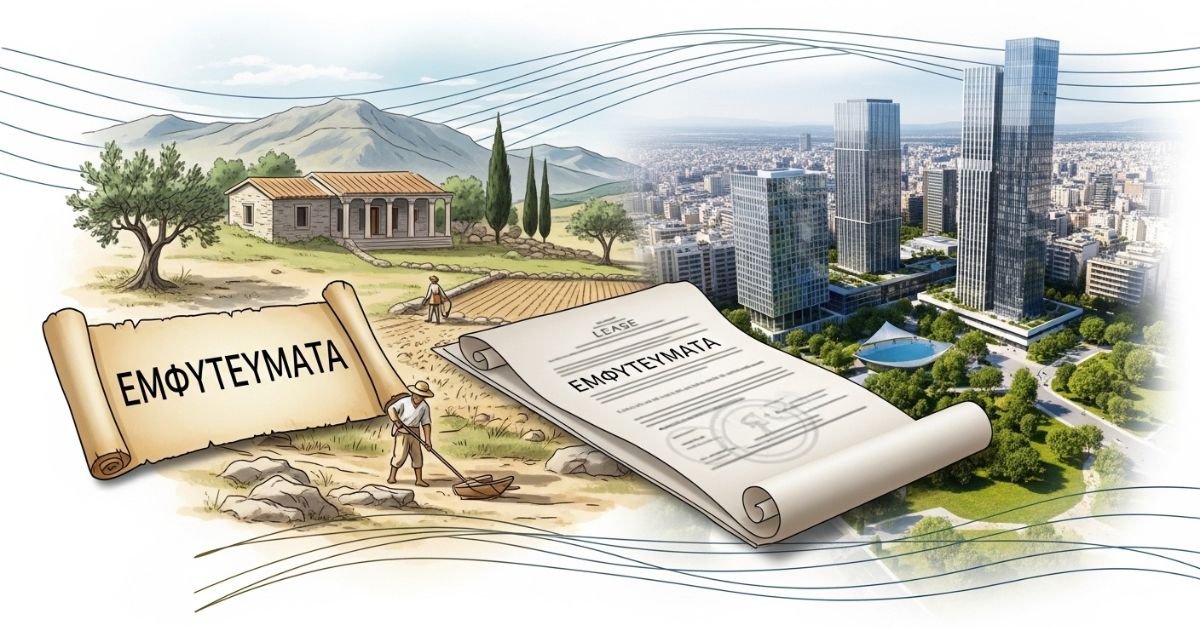
Introduction to the concept of Emfyteymata
Although the term emfyteymata is new to most people, it has profound legal and historical origins. This fascinating idea has influenced our perception of land use and property rights, especially in Greece. The definition of emfyteymata will be revealed when we delve into its history, which begins in ancient culture and continues through its evolution. Whether you have a passion for history or are simply interested in the intricacies of the law, this exploration of emfyteymata will offer intriguing insights into the relevance of this ancient concept in modern times. We invite you to explore the realm of emfyteymata with us and learn its relevance to today’s world.
Origin and history of Emfyteymata in Ancient Greece
Emfyteymata was an essential component of land tenure systems in Ancient Greece. This system made it possible for people to work and profit off the land of others.
In return for a little charge or rent, landowners would transfer these privileges for long periods of time, perhaps even generations. It was a creative answer that boosted agricultural output at a period when resources were limited.
Emfyteymata fostered a sense of ownership and meticulous management by creating a connection between the land and its grower. In addition to boosting community bonds, this partnership boosted local economy.
Interestingly, emfyteymata was used for more than simply agriculture; it paved the way for many types of property relations that impacted European legal systems in the coming centuries. This system’s adaptability revealed prehistoric views of property rights and their use, which in turn reflected the intricacies of social dynamics.
Evolution of Emfyteymata in Modern Times
Emfyteymata has evolved greatly from its ancient origins. The modern legal and economic climate has necessitated revisions to these types of long-term lease arrangements.
Nowadays, They are commonly associated with property development. Rather than buying land outright, investors and developers employ them strategically to get land for a variety of projects. Because of this adaptability, creative city development is possible.
This development is also influenced by technological factors. The use of digital platforms has made emfyteymata agreement management easier and more transparent, leading to more streamlined transactions.
Environmental issues have also impacted the structure of emfyteymata. Responsible land use is increasingly a requirement of many contemporary contracts’ sustainability provisions.
This development mirrors the shifting priorities of society while preserving the core of bygone traditions for use in modern settings.
Understanding the legal and financial aspects
Leases with many years of service are known as emfyteymata, a term with its origins in property law. Under these terms, one party can use another’s land in exchange for rent.
It is a legal concept that gives tenants privileges that are similar to ownership. With this comes the power to build on or alter the property in accordance with the conditions set out. The legal system prioritizes the safety of all parties, however it differs from one jurisdiction to another.
Landlords stand to gain financially from these leases. They lock in a reliable source of revenue for a long time in the form of rent payments. Instead of paying full price for a property, tenants might save money in the long run by obtaining emfyteymata.
Nevertheless, there are also possible dangers. The financial results could be drastically affected by changes in the market or disagreements among the parties involved. Anyone entering into such an agreement today would do well to familiarize themselves with these nuances.
Popular examples of Emfyteymata in today’s society
Urbanization and eco-consciousness have influenced the ways in which emfyteymata has permeated contemporary culture. Community gardens stand out as an example of a model where residents are granted long-term land use rights by municipal government. Citizens can grow their own food in this way, which is great for the environment.
Leases for farmland in several areas are another interesting example. Without really owning the land, farmers can nevertheless secure emfyteymata, which allows them to manage their resources effectively.
In the real estate industry, developers may enter into such contracts with local governments in order to secure long-term leases on public land for the purpose of building homes or running businesses. Maintaining ownership within governmental boundaries is supported by this model, which also fosters growth.
In addition, emfyteymata are commonly used by educational institutions to expand their campuses onto neighboring areas through mutually beneficial leasing transactions. These instances demonstrate how long-forgotten ideas can flourish in the modern world.
The modern significance
Particularly in relation to land usage and property rights, Emfyteymata occupies a special position in modern society. Modern leasing practices, characterized by the prevalence of long-term agreements, can be understood by looking at its historical beginnings.
Modern city planning frequently echoes older ideas. Sustainable land management is made possible by the use of Emfyteymata, which incentivizes good stewardship. As cities continue to expand and encounter more environmental obstacles, this becomes even more crucial.
Interest in emfyteymata arrangements has also been revived by the rise of real estate investments. Consistent returns and the ability to make improvements to the property are what investors look for in long-term leases.
Landlords and tenants alike can benefit from a legal awareness of emfyteymata. Building trust within contractual agreements is facilitated by establishing a framework where expectations are clear.
The value of emfyteymata, which connects historical practices with modern goals in land use and community planning, changes from one society to another.
Conclusion: The enduring legacy of Emfyteymata in our world today
Even in today’s world, the teachings of emfyteymata have an impact. From its humble beginnings in Ancient Greece, this idea has developed into a powerful instrument utilized in many modern-day fields. They are becoming more important because to the complexity of land ownership and the rise in urbanization.
People and companies are now using this structure for leases that last a long time. In addition to facilitating development and investment opportunities that meet modern demands, it also offers stability.
A model for integrating commercial interests with social responsibility, It is also contributing to the growing body of literature on sustainable land use. The flexibility to use land without full ownership promotes creative approaches to managing resources.
Fundamentally, It’s principles are still applicable today. They serve as a constant reminder of the interconnected nature of property rights and communal welfare, a lesson that will serve us well in this dynamic and unpredictable world.